Why Does Food Keep Getting Stuck Between the Same Two Teeth?
You finish lunch, reach for the floss, and there it is again.
A piece of chicken, spinach, popcorn, or something else has managed to wedge itself between the exact same two teeth it always does.
Once or twice, that is probably nothing unusual. But when food repeatedly gets trapped in one particular spot—meal after meal—it may be worth paying attention to. Persistent food trapping, sometimes called food impaction, can happen for several reasons, including changes in the contact between neighboring teeth, tooth position, bite relationships, the shape of the teeth or restorations, and changes in the gum tissue between teeth.
In other words, the food itself may not be the real problem. The more useful question is: Why has that particular spot become such a good place for food to hide?
1. Why Food Gets Stuck Between Teeth in the First Place
Healthy neighboring teeth usually have a contact area where they meet. That contact, along with the shape of the teeth and surrounding gums, helps guide food away from the space between them while you chew.
If something changes in that relationship, food may begin getting pushed downward between the teeth. Sometimes the change is small enough that you cannot see it in the mirror. You may notice only that you suddenly need floss after practically every meal.
That seemingly minor annoyance can provide useful information during an evaluation with a Dentist in Thornton, CO , especially if the problem is new, becoming more frequent, or accompanied by discomfort.
2. A Small Gap May Have Developed Between the Teeth
Teeth are not permanently frozen in place. Over time, their positions and contact points can change. Even a relatively small opening between two neighboring teeth can create enough room for fibrous foods to become trapped.
You may notice that floss suddenly slides through an area more easily than it used to, or that a particular food almost seems drawn into the same gap every time you chew.
This does not necessarily mean something serious is happening. But if a gap seems to have appeared where there was not one before, it is worth having the area examined rather than assuming you simply need to floss more often.
3. A Cavity Could Be Changing the Shape of the Area
Not every cavity begins with a toothache. Decay can develop on the surfaces between neighboring teeth, where it may be difficult for you to see at home. As the surface of a tooth changes, it can create an area where plaque and food debris accumulate more easily.
This is one reason a Dental Exams in Thornton, CO visit can be useful when food repeatedly catches in one location. Your dentist can inspect the contact, the surrounding gum tissue, and the tooth surfaces for changes that may not be obvious from the outside.
If decay is discovered, appropriate Dental Fillings in Thornton, CO may help restore the damaged tooth and its proper form, depending on the location and extent of the cavity.
4. An Older Filling or Crown May Be Part of the Problem
Dental restorations are designed to reproduce the shape and function of natural teeth, including the way neighboring teeth contact each other.
But restorations can wear, fracture, or develop issues over time. Occasionally, a contact beside a filling or crown may not prevent food from being driven into the space during chewing.
If you notice that food trapping began after dental treatment—or around an older restoration—it is useful information to mention to your dentist. It does not automatically mean the restoration needs to be replaced. The important part is determining why the food is collecting there before deciding what, if anything, should be done.
5. Your Gums May Have Changed
The small triangle of gum tissue between neighboring teeth is known as the interdental papilla. That tissue normally fills much of the space beneath the contact between teeth.
When the shape or position of the gum changes, a larger space may become available for food and plaque to collect. Food trapping can then become part of an unpleasant cycle: something gets caught, you work aggressively with floss or a toothpick to remove it, the area becomes irritated, and then the same thing happens at the next meal.
This is where Preventative Dentistry in Thornton, CO becomes more valuable than simply trying increasingly aggressive ways to clean the area yourself. A dental professional can determine whether the issue is primarily related to plaque buildup, gum health, tooth position, the contact between teeth, or another cause.
6. Your Bite Can Push Food Into the Space
Sometimes the gap between the teeth is not the entire story. The way opposing teeth come together can influence how food is directed during chewing.
Imagine a small wedge repeatedly pushing food toward exactly the same location every time you bite down. That is why simply looking for a visible gap does not always explain what is happening.
A dentist can evaluate the area while considering both the neighboring teeth and how your upper and lower teeth interact when you chew.
7. Food Trapping Around a Dental Implant Deserves Attention Too
People with dental implants may encounter a slightly different version of the problem. Natural teeth can experience subtle positional changes over time, while an implant remains fixed in the bone.
In some patients, this can eventually affect the contact between an implant-supported restoration and the neighboring natural tooth.
If you have an implant and food has recently started collecting beside it, mention the change during an evaluation for Dental Implants in Thornton, CO rather than assuming the problem is an unavoidable part of having an implant.
8. Is Food Getting Stuck Actually Harmful?
The occasional piece of food stuck between otherwise healthy teeth is not usually a reason to panic. The concern is repeated food impaction in the same location .
Food debris can be uncomfortable on its own, but the more important issue is the plaque that develops in difficult-to-clean spaces. Persistent accumulation can also irritate the surrounding gum tissue.
You might eventually notice tenderness, bleeding when flossing, swelling, an unpleasant taste, sensitivity, or discomfort when biting. Those symptoms do not tell you exactly what the cause is—but they are good reasons not to keep treating the situation as nothing more than a lunchtime inconvenience.
9. Should You Just Floss the Area More?
Cleaning between the teeth is important, and floss or another appropriate interdental cleaner can help remove food and plaque.
But there is an important distinction: Floss can remove the food. It cannot necessarily correct the reason the food keeps getting trapped.
If there is an open contact, cavity, damaged restoration, change in tooth position, bite-related issue, or problem with the surrounding gums, repeatedly flossing the area addresses the consequence rather than the underlying cause.
Avoid digging aggressively at the gum with sharp objects in an attempt to remove stubborn food. Gentle flossing or an appropriate interdental cleaning device is safer while you arrange an evaluation if the problem persists.
10. How Can a Dentist Figure Out What Is Happening?
The evaluation is usually about finding the source of the problem rather than simply confirming that food gets stuck.
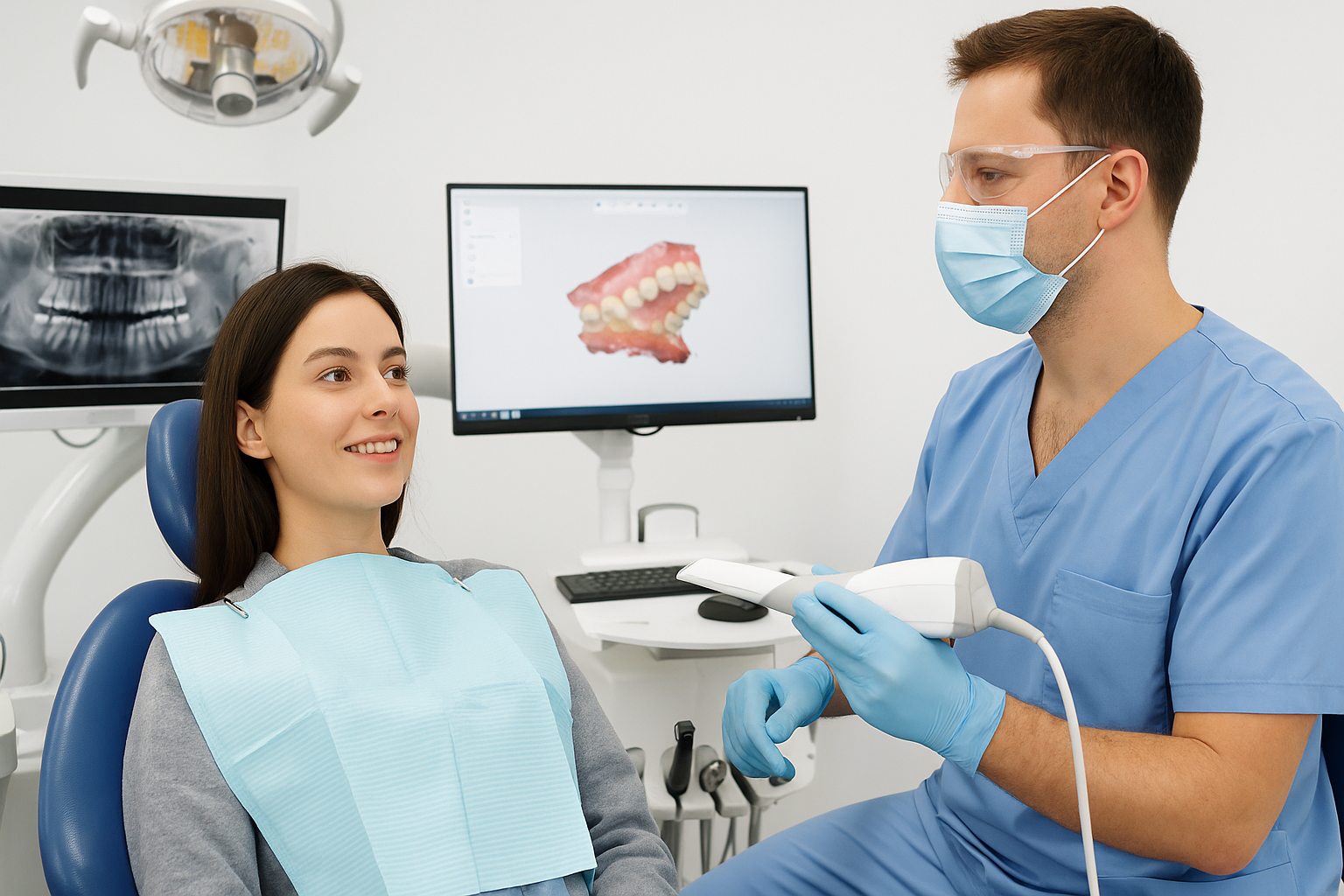
Your dentist may look at how tightly the neighboring teeth contact one another, inspect existing fillings or crowns, examine the gum tissue, evaluate your bite, and check for signs of decay.
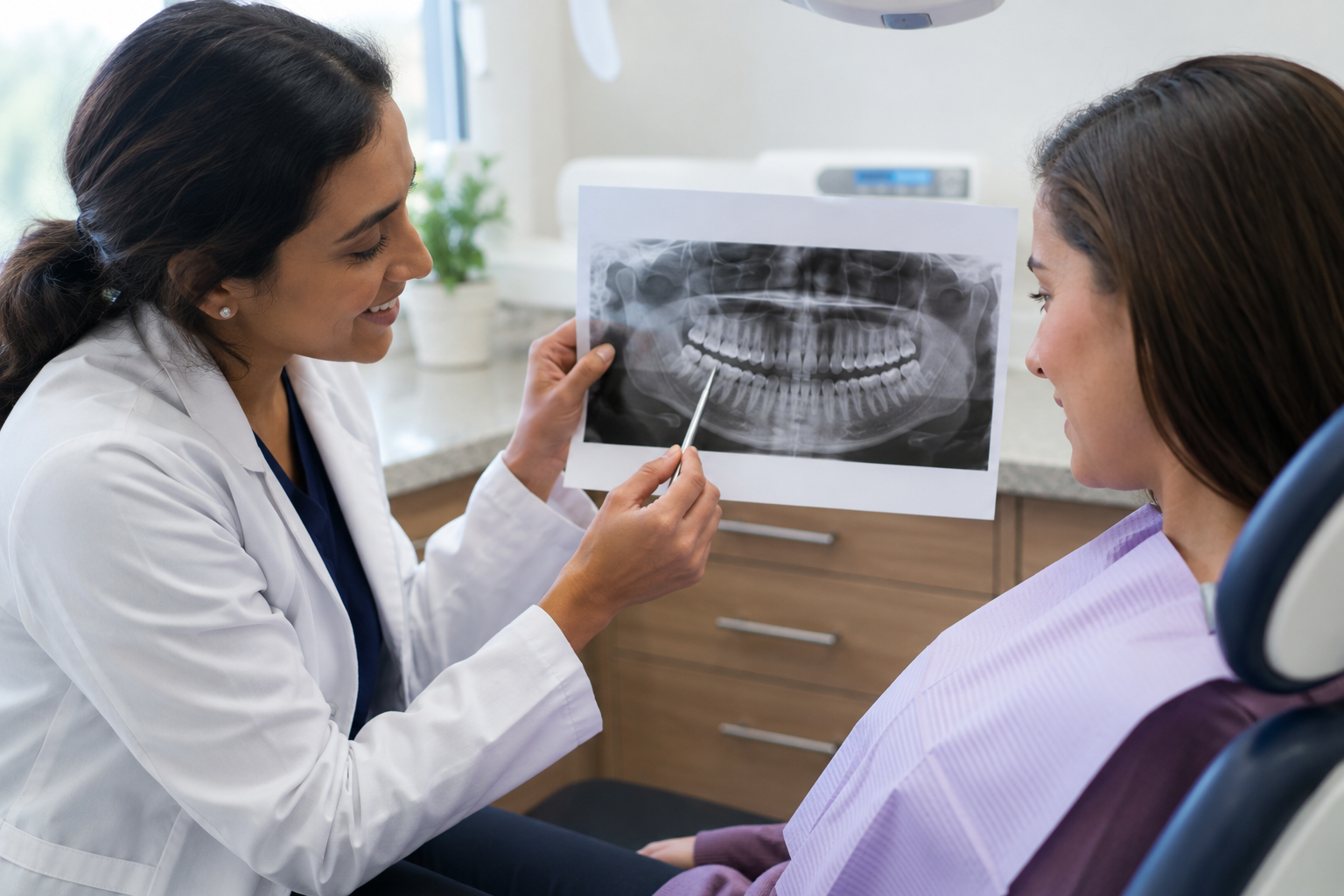
When the suspicious area cannot be completely evaluated by sight alone, Digital X-rays in Thornton, CO may provide additional information about the surfaces between teeth and the structures surrounding them.
The appropriate solution depends entirely on what is causing the food trap. For one person, improved interdental cleaning may be enough. For another, treatment might involve addressing decay, evaluating a restoration, managing gum disease, correcting a problematic contact, or considering tooth-position or bite-related factors.
When Is It Time to Have the Area Checked?
Pay particular attention when food suddenly begins getting trapped in a place where it never did before.
It is also worth bringing up at your dental visit if the same location traps food after most meals, floss repeatedly shreds or catches there, the gum bleeds or feels sore, you notice sensitivity, there is an unusual taste or odor coming from the area, or the space between two teeth appears to be getting larger.
You do not need to wait until the tooth hurts. In fact, the absence of pain is one reason these problems can be easy to dismiss.
That Annoying Food Trap May Be Useful Information
Most people think of food stuck between their teeth as an inconvenience: find floss, remove it, move on.
But when the same two teeth keep trapping food again and again , your mouth may be providing a clue worth investigating.
It could be something as straightforward as an area that needs better cleaning. It could also involve the contact between the teeth, a restoration, tooth movement, your gums, your bite, or decay that is difficult to see on your own.
Instead of simply accepting that one troublesome gap as part of every meal, mention it at your next dental visit. Sometimes a very small everyday annoyance is exactly what helps uncover a problem while it is still much easier to address.